
X-ray screens – history, development, and modern technologies
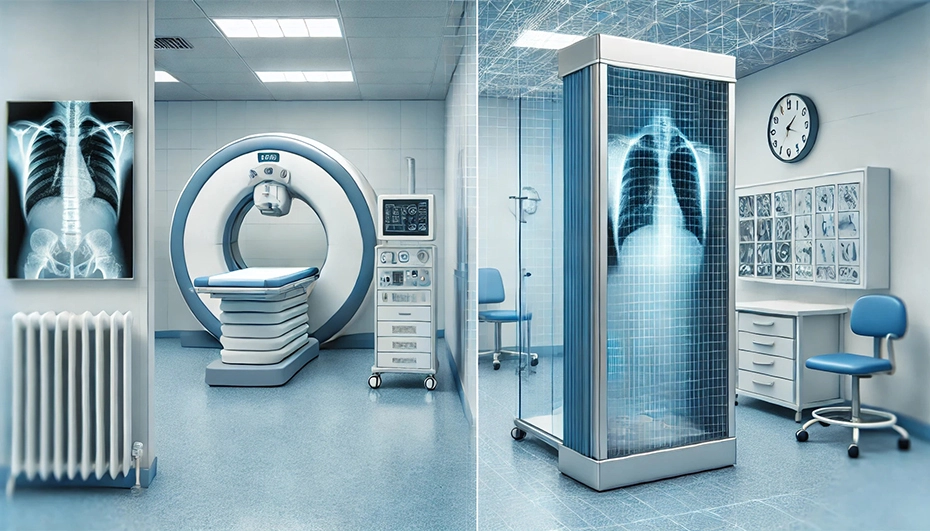
Radiological protection is one of the key fields in medicine, continuously evolving to ensure the safety of medical personnel and patients. Among the most important elements of this protection are x-ray screens. Their history, development, and modern technologies reflect the progress in radiology and approaches to health protection. In this article, we will trace how x-ray screens have changed over the years, explore the modern materials and features they offer, and discuss potential innovations for the future.
History of x-ray screens
1. The beginnings of radiological protection
Radiology as a medical field began to develop rapidly after Wilhelm Roentgen discovered X-rays in 1895. Initially, little was known about the harmful effects of ionizing radiation. Over time, it became apparent that prolonged exposure to radiation led to serious health consequences, such as skin damage and cancers.
The first protective barriers were very basic, consisting of heavy curtains or screens made of dense materials like steel. However, these solutions were ineffective and impractical for everyday use.
2. Introduction of lead as a protective material
A breakthrough in radiological protection came with the introduction of lead as the primary shielding material. Its high density and ability to absorb radiation made it an ideal choice. Lead-based screens began to be widely used in the 1930s, providing significantly better protection than earlier methods.
Development of technology and materials
1. Evolution of x-ray screen designs
Early x-ray screens were heavy and difficult to move. They were primarily large, stationary panels that could only be used in a single location. As technology advanced, lighter designs with wheels were introduced, greatly improving their functionality and expanding their range of applications.
2. Modern protective materials
Contemporary x-ray screens utilize various protective materials that combine effectiveness with user convenience:
- Lead composites: Lighter than traditional lead, easier to handle, and more environmentally friendly.
- Modern polymers: An alternative to lead, offering high protective efficiency while reducing weight.
- Lead glass: Used in screens with observation windows, allowing patient monitoring without radiation exposure.
3. Functionality and ergonomics
Modern x-ray screens are designed with user comfort in mind. They feature:
- Mobility: Wheels with locking mechanisms allow for easy movement and stabilization.
- Adjustable dimensions: Height and width can be tailored to the specific needs of a medical facility.
- Customization: Options to personalize color, additional features, and accessories.
Modern technologies in x-ray screens
1. Innovative monitoring systems
Contemporary x-ray screens can be equipped with intelligent radiation monitoring systems that:
- Provide real-time information on exposure levels,
- Issue warnings when safe thresholds are exceeded,
- Record exposure data for documentation purposes.
2. Eco-Friendly materials
In response to the growing demand for more sustainable solutions, manufacturers are introducing materials that are easier to recycle and less harmful to the environment. Examples include lead composites, which replace traditional lead while maintaining high protective efficiency.
Applications of x-ray screens
1. In operating rooms
X-ray screens are essential in operating rooms where mobile X-Ray devices are used. They protect the surgical team from radiation while allowing unrestricted access to the patient.
2. In intensive care units (ICU)
In ICUs, x-ray screens are used to shield staff during bedside imaging. Their mobility allows for quick adaptation to the patient’s needs.
3. In diagnostic labs
Stationary x-ray screens are standard equipment for technicians performing imaging procedures.
4. In veterinary medicine
X-ray screens are also used in veterinary radiology, providing protection during diagnostic imaging of animals.
The future of x-ray screens
1. Intelligent screens
Advanced technologies could lead to the development of screens that automatically adapt to working conditions, offering dynamic protection based on radiation levels.
2. Integration with hospital systems
X-Ray screens may become part of larger monitoring systems, enabling better management of radiological protection in medical facilities.
3. Lighter and more Eco-Friendly materials
Research into lead alternatives continues, and future materials could offer the same level of protection while being significantly lighter and more environmentally friendly.
Conclusion
The history and development of x-ray screens demonstrate their vital role in radiological protection. From simple, heavy protective barriers to modern, lightweight, and mobile solutions, x-ray screens have evolved significantly to ensure safety and user convenience.
Choosing the right x-ray screen is an investment in the safety of staff and patients. If you’re looking for modern and reliable solutions, explore the offerings at Coradika.pl – a leader in providing innovative radiological protection products.


