
Comparison of x-ray screens: mobile vs. stationary – which one to choose?
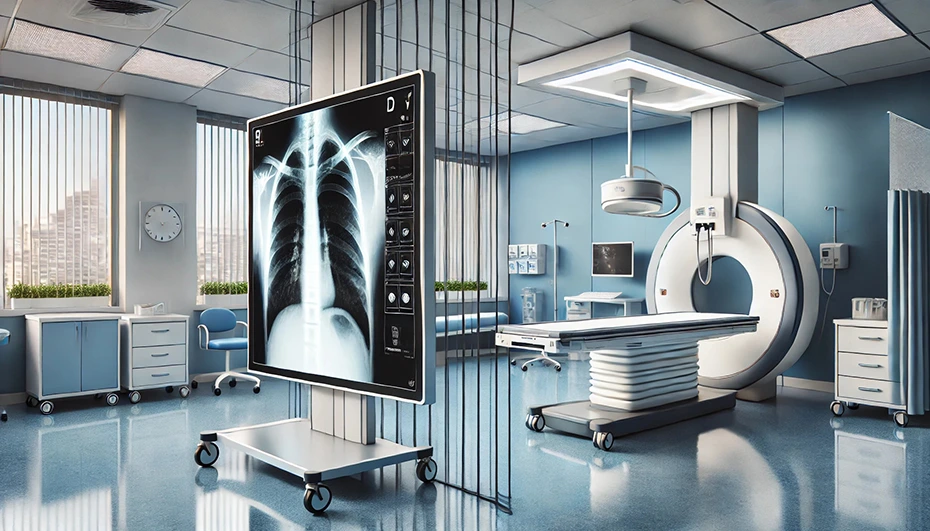
In radiological protection, X-ray screens play a key role in safeguarding medical staff and patients from harmful ionizing radiation. Depending on the specifics of the medical facility and the types of procedures being performed, we can choose between mobile and stationary screens. In this article, we will thoroughly discuss the differences between these two types of screens, their advantages and disadvantages, and provide guidance on how to make the best choice.
Also, read about the history of X-ray screens in radiological protection – here.
Characteristics of mobile x-ray screens
1. Key features
Mobile x-ray screens are the most versatile solution in radiological protection. Thanks to built-in wheels and lightweight construction, they can be easily moved between rooms. They are particularly useful in situations where protection needs to be adjusted to dynamically changing work conditions.
2. Applications
Mobile x-ray screens are used in many medical environments:
- Operating rooms: Ideal for situations where quick adjustment of protection is needed during a procedure.
- Intensive care units (ICU): Allow protection for staff during bedside imaging.
- Diagnostic rooms: Support technicians performing various exams in a shared space.
- Veterinary radiology: Help protect technicians in dynamic conditions while working with different animal species.
3. Advantages
- Mobility: Easily moved between rooms.
- Flexibility: Adjustment of the protection position to current needs.
- Lightweight construction: Easier for staff to handle and operate.
4, Disadvantages
- Lower stability: Compared to stationary screens, they may be less stable.
- Limited protection: Often offer a lower level of protection than their stationary counterparts.
Characteristics of stationary x-ray screens
1. Key features
Stationary x-ray screens are permanently installed protective barriers that provide high stability and effective radiation protection. They are generally larger and heavier, making them ideal for use in fixed locations where protection is consistently needed.
2. Applications
Stationary X-ray screens are best suited for places where protection is required in one, fixed location:
- Diagnostic rooms: Provide permanent protection for technicians operating X-ray devices.
- X-ray rooms: Standard equipment in areas where regular radiological exams are performed.
- Research laboratories: Protect personnel working with radiation experiments.
3. Advantages
- Higher protection level: Thicker protective layers and greater stability.
- Permanence: Ideal for locations where radiological protection needs to be available at all times in the same spot.
4. Disadvantages
- Lack of mobility: Cannot be moved to other rooms.
- Heavier weight: More challenging to install and handle.
Comparison of applications in different medical environments
1. Operating rooms
- Mobile screens: Essential when quick adjustment of protection is needed to accommodate the patient’s and surgical team’s position.
- Stationary screens: Less commonly used as they may limit movement flexibility.
2. Intensive care units (ICU)
- Mobile screens: The best choice for providing flexible protection in dynamic conditions.
- Stationary screens: Rarely used due to the lack of mobility.
3. Diagnostic Rooms
- Stationary screens: Standard equipment, providing high protection efficiency.
- Mobile screens: Can be used as additional protection.
4. Veterinary radiology
- Mobile screens: The most practical option, as they allow protection in various locations and for different types of exams.
- Stationary screens: Less commonly used unless the work takes place in a fixed space.
Key criteria for choosing the right x-Rray screen
When selecting the appropriate x-ray screen, the following factors should be taken into account:
1. Nature of work
- Is radiological protection needed in various locations? If so, choose a mobile screen.
- Does the work take place in a fixed location? In this case, a stationary screen would be a better solution.
2. Level of protection
- If maximum protection is required, stationary screens with thicker protective layers will be the best option.
- In dynamic working conditions, mobile screens with thinner yet effective protection will be more practical.
3. Space in the medical facility
- In areas with limited space, mobile screens allow for greater flexibility.
- In larger rooms, stationary screens may be more effective.
Conclusion
The choice between mobile and stationary x-ray screens depends on the specific needs of the medical facility. Mobile screens offer flexibility and ease of use, making them ideal for dynamic environments such as operating rooms or intensive care units. On the other hand, stationary screens provide a higher level of protection and stability, making them best suited for fixed locations such as diagnostic rooms.
If you are looking for the right solution for your facility, explore the offerings at Coradika.pl – a leader in providing innovative and reliable radiological protection products.


